Metal Injection Molding Cost: Tooling, Volume and Break-Even vs. CNC
Updated 3 November 2026 · CSMFG technical guides
Metal injection molding cost is the combination of dedicated tooling, qualification and the recurring cost of making an accepted finished part. CSMFG's November 2026 examples provide two concrete reference points: a 17-4PH H900 Cam Lever at RMB 2.40 per piece above 2,000 pieces, and a conventional-PM SS304L Holder at RMB 4.40 above 10,000 pieces. The two components have different drawings and requirements, so their prices are not a same-part process comparison.
First compare the proposed route against the drawing, material condition and realistic lifetime quantity. Then include feedstock, molding, binder removal, sintering, yield, machining, finishing and inspection. A tool that removes several repeated machining setups may justify its investment; a tool that needs frequent redesign may not. The illustrated cases below show the supplied parts and specifications. Request a formal scope for tooling, delivery and the final accepted condition before using a reference price in a purchasing decision.
Watch: Metal Injection Molding Cost
What does the 17-4PH H900 Cam Lever cost?
The CSMFG Cam Lever is a metal injection molded part specified in 17-4PH H900, with a reported unit price of RMB 2.40 per piece for orders above 2,000 pieces. According to CSMFG's part information supplied on 3 November 2026, the example combines a shaped lever body with a pivot feature. The supplied drawing explicitly calls for drilling, illustrating why a MIM quote should identify secondary operations alongside molding and sintering.
The price belongs to the illustrated Cam Lever and its stated quantity threshold. Tooling, inspection scope, packaging, tax, freight and quotation validity were not itemized with the example; request those terms for a purchasing decision. A different lever, alloy condition or bore requirement needs its own quote. The H900 designation identifies the specified final material condition; the example does not supply a tensile or fatigue test report. See the secondary-operations guide for planning machining and heat treatment together.


What does the SS304L powder-metal Holder cost?
The CSMFG Holder, also called Halter, is a conventional PM example with a reported unit price of RMB 4.40 per piece for orders above 10,000 pieces. The supplied specification is SS304L, MPIF Std. 35, density 6.6 g/cm³ and hardness 45 HRB. These are the stated part requirements, not values reconstructed from a photograph. The drawing and production photo below connect the price to an identifiable component rather than a generic powder-metal price range.
According to CSMFG's November 2026 part information, the Holder and Cam Lever are different components, materials and order quantities. Their prices therefore cannot establish whether PM or MIM is cheaper for the same design. Compare both routes only after fixing the same drawing, final condition, inspection scope and quantity. MPIF's standards overview distinguishes structural-PM and MIM material standards; the Holder example does not identify a standard edition or attach a test certificate.


What drives the price of an MIM part?

| Cost driver | Why it matters | Question to ask |
|---|---|---|
| Tool and cavities | Slides, cores and multiple cavities change investment and capacity | Which features require moving tooling? |
| Material and part mass | Fine powder and binder contribute to feedstock cost | Can a heavy section be cored without affecting function? |
| Debinding and sintering | Section thickness, furnace support and cycle time affect throughput | Which geometry controls the thermal cycle? |
| Yield and handling | Fragile parts or difficult geometry can increase rejects | Is the quote based on accepted parts? |
| Secondary operations | Tight bores, threads and cosmetic finishes may need additional work | Which features are molded, machined or finished? |
| Inspection and qualification | Functional and safety requirements can add testing | What samples and ongoing tests are included? |
How do you calculate break-even volume?
When unit costs are reasonably stable, compare total cost = fixed tooling and qualification + accepted quantity × variable cost per accepted part. If MIM tooling and qualification cost $20,000 more than machining, but the MIM route saves $2 on each accepted part, the simple break-even is 10,000 parts: $20,000 ÷ $2. These numbers are illustrative, not a CSMFG quote or typical price.
Include tooling for both routes, tool maintenance, design changes, inventory, rejection, freight and any cost difference in inspection. If the MIM variable cost is equal to or higher than machining, this simple calculation has no positive break-even from unit-cost savings alone. Compare scenarios when volume and yield are uncertain.
When does MIM deserve a closer look?
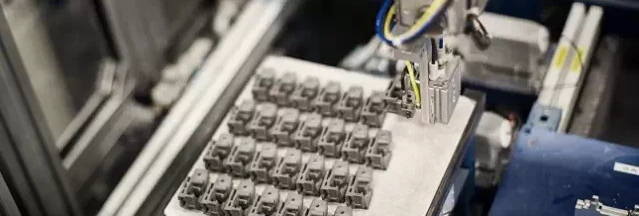
MIM deserves a closer look when a small, stable design combines several features and the expected production volume can spread dedicated tooling costs. A contoured latch with a bore and side feature may otherwise require multiple CNC setups. A simple turned pin, frequently changing prototype or part with unsuitable size may favor another route.
For example, compare an MIM blank plus bore machining against a fully machined part using the same acceptance criteria. Include tooling, qualification, yield, inspection, finishing and maintenance in the lifetime calculation; a low nominal piece price is not the same as a low accepted-part cost.
The Metal Injection Molding Association’s design guide identifies the intersection of shape complexity, quantity, material performance and cost as central to choosing MIM.
What information produces a useful quote?
A useful MIM quote is a priced manufacturing route tied to one drawing revision, material condition and quantity. For example, the CSMFG Cam Lever combines a 17-4PH H900 specification with a drilled pivot feature. Its November 2026 reference price of RMB 2.40 above 2,000 pieces becomes more useful when the quote identifies the tool, machining, final inspection and delivery scope associated with that component.
First provide the 3D model, dimensioned drawing, expected orders and assembly-critical features. Second request separate one-time tooling and qualification charges, plus piece prices at the relevant quantity breaks. Identify tool ownership, maintenance, permitted rework and changes that require approval. A cosmetic surface, tight bore or post-sinter treatment can add operations even when the molded shape stays unchanged. Compare quotations on the same finished-part basis; a cheaper blank is not necessarily a cheaper assembled component. Use the secondary-operation guide to check the proposed scope.
How do design changes affect total cost?
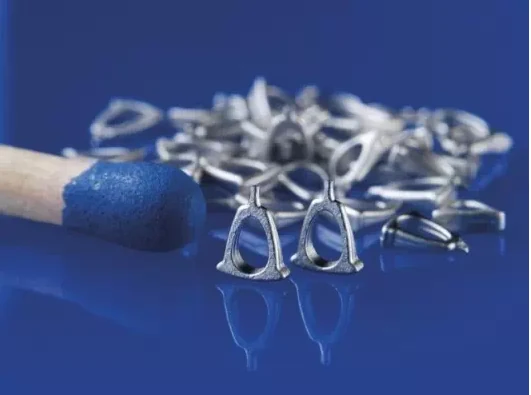
A molded side hole may eliminate a drilling step but require a slide, adding tool cost and maintenance. A tighter bore may increase inspection and require machining even if the rest of the part is molded. For each critical feature, compare the tool investment with the cost of making and checking that feature on every part.
Coring a large boss can save material and shorten the path for binder removal. It also changes the load-bearing section and introduces a core pin, so verify the mechanical effect and tooling practicality. Compare the complete revised part rather than assuming lower weight automatically means lower cost.
How should uncertain volumes be handled?
Calculate scenarios for a conservative forecast, the expected forecast and a higher-volume case. Use accepted-part quantities and obtain price breaks in writing. If the design is still changing, assess the cost and schedule of modifying the tool. Consider machining early parts while production tooling is qualified, but validate any process change against the final material and performance requirements.
Why can two MIM suppliers quote different tooling and piece prices?
Tooling portability is the ability to move a production mold to another supplier without losing the qualified dimensional result. MIM feedstock and thermal shrinkage make that question more involved than moving a drawing. According to PIM International's cost analysis, feedstock sourcing and batch-versus-continuous thermal processing help explain supplier cost differences; a tool optimized for one feedstock is not automatically interchangeable.
The article reports a historical comparison of eight mold quotations ranging from US$27,000 to US$70,000, with 8–12 week delivery estimates. Those figures are an attributed industry example, not current CSMFG prices. For the CSMFG Cam Lever, first separate tooling ownership and modification terms from the RMB 2.40 reference piece price. Then ask how a future feedstock, furnace or supplier change would be validated. A lower tooling quote and a lower piece quote can represent different cost allocations and qualification responsibilities.
MIM cost questions
Is metal injection molding cheaper than CNC machining?
MIM is a potential cost-saving route when a stable small component requires enough repeated machining to justify dedicated tooling. CNC machining often suits early prototypes, changing designs and quantities that cannot absorb mold development. The answer is determined by the same-part calculation, not by a universal order threshold.
For example, CSMFG's 17-4PH H900 Cam Lever is offered as a November 2026 reference at RMB 2.40 per piece above 2,000 pieces. That is a useful MIM quotation starting point; there is no matching CNC quote in the supplied information. First price the identical drawing, final condition and inspection requirements by CNC. Then compare tooling and qualification with the recurring cost per accepted piece. Include the Cam Lever's drilled feature, any heat treatment, finishing and rejected-part cost. A PM Holder priced at a different quantity cannot replace that CNC comparison, because material and geometry would change at the same time.
How do you calculate a MIM break-even quantity?
When MIM has a higher fixed cost and a lower variable cost, divide the additional fixed cost by the saving per accepted part. The result changes with yield, volume, maintenance and finishing; if there is no per-part saving, there is no positive break-even under this simple model.
Related reading: Review MIM design guidelines, compare MIM with conventional PM, and understand MIM shrinkage and tolerances.
Request a part-specific discussion through CSMFG’s powder metallurgy and MIM services.
Use the secondary-operations selection guide to identify finishing and inspection steps that belong in a complete quote.